
content_header_admissions_02
Content_Defy_the_Ordinary
Defiance College

AdmissionsAcademicsStudent LifeAthleticsGive to DC


Academics:

Science & Math
Biology
Forensic Science
Mathematics
Medical Laboratory Science
Molecular Biology
Nursing (1+2+1)
Nursing (RN to BSN)
Restoration Ecology

Pre-Medical
Pre-Dentistry
Pre-Veterinary Science
Pre-Optometry

Integrated Mathematics
Life Science - Education
Life Science & Chemistry


Arts & Humanities
Behavioral & Social Sciences
Business & Allied Health

Education
Science & Math


See Also:
Majors
Registrar's Office
Catalog and Schedules
Academic Calendar

First-Year Experience
McMaster School
Carolyn Small Honors
Design for Leadership

Graduate Programs


Untitled Document

Print_Header_DC_Defy

Restoration Ecology

Apply Online
Request More Information

Major Brochure | Courses | Sample Plan of Study


Those who possess a passionate curiosity about the natural world and are led by a protective spirit of stewardship live the truth of Thoreau’s words:  “You must love the crust of the earth on which you dwell more than the sweet crust of any bread or cake.”
At Defiance College, these lovers of the earth are restoration ecology students and faculty.

Restoration ecology is the art and science of restoring and repairing damaged or destroyed ecosystems. With the worldwide destruction of rain forests, wetlands, old growth forests, prairies, streams, lakes, rivers and oceans, restoration ecologists make a real difference in the world.

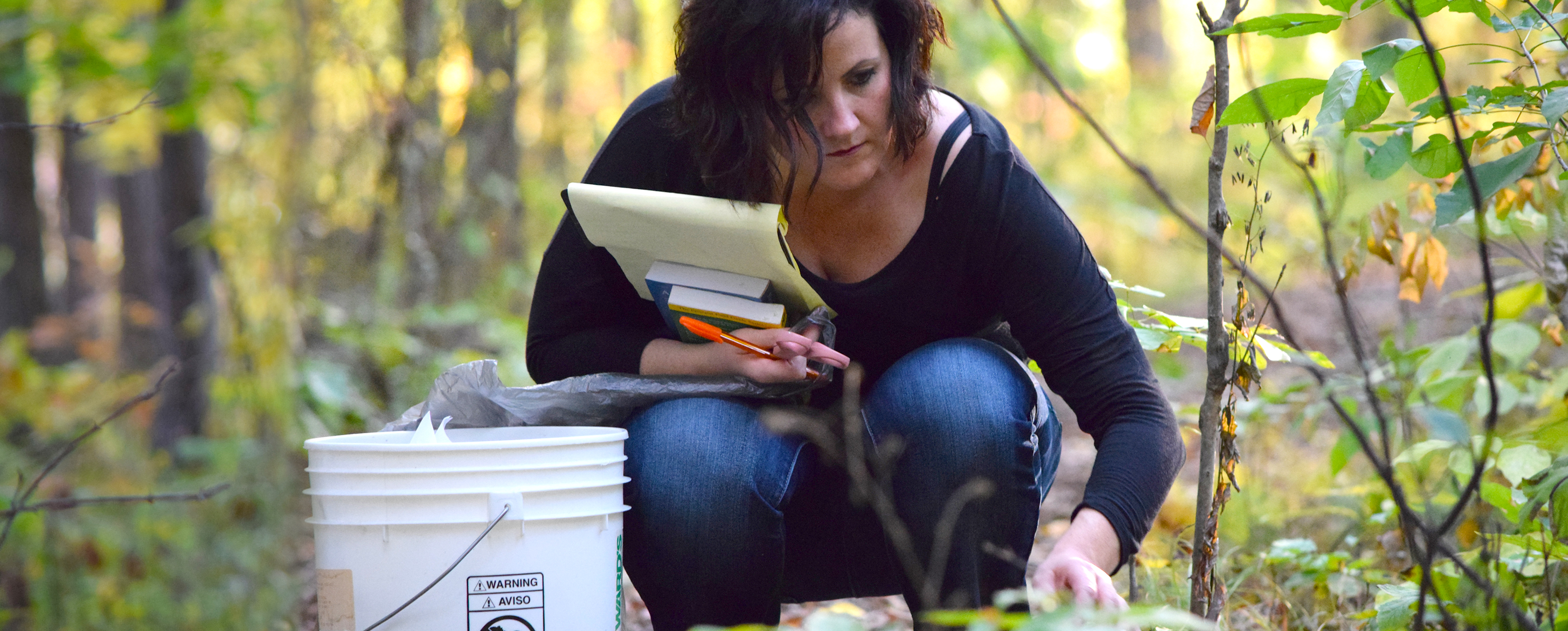
At Defiance College, the only small liberal arts college in the Midwest with a restoration ecology program, students gain critical fieldwork experience at the Thoreau Wildlife Sanctuary where they have planted more than 40,000 trees in addition to herbaceous terrestrial and wetland plants. Students have also conducted research involving prairie burns, the reintroduction of bobwhite quail and ringneck pheasants, and distributions of amphibians, reptiles, birds, and mammals. Current projects range from control of invasive terrestrial plants to effects of cropland on water quality.

As students work with restoration ecology faculty, their curiosity and stewardship spirit transforms into critical skills, and they graduate with a global perspective on ecological restoration, prepared for work in settings that range from private business and conservation organizations to governmental agencies.

Love the crust of the earth. Learn about it. Protect it. 

The feast begins here.


The Program

The Restoration Ecology program at Defiance College is unique among undergraduate programs in the United States. This program began in the 1990’s, and is one of less than 20 Restoration Ecology degree programs offered in the United States and Canada and the only one at a small, liberal arts college.

Training in Restoration Ecology gives students an opportunity to prove themselves, and in the process, become accustomed to working in a career situation that demands application of special academic skills. Students graduate with a global perspective on ecological restoration and are well-prepared for a wide variety of career options in this field.

Major Brochure | Courses | Sample Plan of Study


Research and Internships


Thoreau Wildlife Sanctuary
Defiance College, in partnership with the Diehl Family Foundation, established the Thoreau Wildlife Sanctuary in 1989. More than 200 acres of farmland were converted to prairie, meadow, deciduous forest, wetland, and white pine forest habitats. Management of these habitats is ongoing and has been integral to the development of the Restoration Ecology major at Defiance College.

Restoration Ecology students have planted more than 40,000 trees on the Sanctuary property, as well as planting herbaceous terrestrial and wetland plants. Further, students have conducted research involving reintroduction of bobwhite quail and ringneck pheasants, prairie burns, and distributions of amphibians, reptiles, birds, and mammals. Current projects range from control of invasive terrestrial plants to effects of cropland on water quality.

Capstone Projects and Research
An undergraduate restoration research project will serve as the senior capstone experience for the restoration ecology major. Undergraduate research may be completed at the 200-acre Thoreau Wildlife Sanctuary. Examples of research include establishment of relic prairie plants and wildflowers, study of bird migration, development of wetlands, woodlot development, study of meadow species establishment, and butterfly population restoration, just to name a few.

Internships
Students will complete an internship (normally between the junior and senior year) to acquire additional field experience.


Opportunities

Travel Opportunities
Students have the opportunity to take yearly field trips. Recent trips have been to Yellowstone National Park and the Tetons in Wyoming as well as the rain forests of Belize and Australia.

Student Ecology Club
This organization was established to promote ecological restoration, develop/restore small ecosystems, and increase environmental awareness by connecting with nature through positive learning experiences which will benefit ourselves, our environment, and wildlife in our community. Member are responsible for road-side pickup. This club is open to any student with an interest in environmental issues and the outdoors.


After College — What’s Next?

Because of major environmental problems faced worldwide, graduates in the environmental fields are in demand. Opportunities exist in private businesses and with governmental agencies. Examples include restoration project managers, nature sanctuary research assistants, environmental organization staff, and restoration consultants with private firms. Students have gone on to work in a variety of public and private sector jobs, such as working for environmental consulting firms and park districts.

Training in Restoration Ecology gives you an opportunity to prove yourself, and in the process, become accustomed to working in a career situation that demands application of special academic skills. Students graduate with a global perspective on ecological restoration, well prepared for a wide variety of career options in this field.


The Faculty

Douglas D. Kane, Ph.D., Associate Professor of Biology
419-783-2593 | dkane@defiance.edu | Faculty Profile

Alyson Laframboise, Ph.D., Assistant Professor of Biology
419-783-2593 | alaframboise@defiance.edu

Kenneth Adair, Ph.D., Assistant Professor of Chemistry
419-783-2598 | kadair@defiance.edu

Somnath Dutta, Ph.D., Associate Professor of Chemistry
419-783-2428 | sdutta@defiance.edu

Nathan Griggs, Ph.D., Associate Professor of Biology
419-783-2592 | ngriggs@defiance.edu

Untitled Document


This page has been formatted for printing.

Defiance College | Defy the Ordinary
701 N. Clinton St.
Defiance, OH 43512
1.800.520.GODC
webmaster@defiance.edu

© 2007-2012 Defiance College. All Rights Reserved.

HomeAccess EmailCampus DirectoryApply Online

Defiance College | 701 N. Clinton St. | Defiance, Ohio 43512 | 1.800.520.GODC | Contact us

© 2007-2013 Defiance College. All Rights Reserved. | Privacy Policy